Having a great reputation is just as important as having a professional website. In the past, word-of-mouth referrals happened at the grocery store or church. Today, they happen online.
Modern patients trust the internet to help them find the best healthcare providers. In fact, 73.28% of patients consider online reviews when choosing a provider.
Search engines like Google operate the same way. If Google doesn’t see proof that patients trust you, it won’t rank your medical practice on the first page. Online reviews act as crowd-sourced recommendations.
Therefore, Google listings with more stars and better feedback are likely to rank higher. But how exactly do these reviews change your search position? What is the role of AI in 2026? Read on to learn how to master your search engine reputation management.
Key Takeaways
- Online reviews are a direct ranking factor that signals “Trust” to Google’s search algorithm.
- AI search tools now analyze the actual text of reviews to identify medical specialties, not just star counts.
- Optimizing your Google Business Profile with fresh reviews is essential for ranking in the Local Pack.
- Review recency is vital; a new 4-star review often carries more weight than an old 5-star rating.
- Doctors must maintain HIPAA compliance by keeping review responses professional and void of private details.
Table of Contents
The Algorithm of Trust
Developing a solid healthcare SEO strategy starts with Google’s algorithm. This is a complex formula that ranks websites based on a user’s search query. It decides which doctors appear at the top of the page and which ones get buried on page two.
The algorithm looks at hundreds of factors, but for doctors, it boils down to three main pillars:
- Quality: Google prefers websites with helpful, original, and easy-to-read content. Your healthcare website design must be user-friendly and mobile-responsive.
- Authority: This measures how “important” your site is. Websites gain authority when other trusted medical sites link back to them.
- Trust: This is where reviews come in. Websites with positive reviews signal to Google that real people trust your services.
Mastering Local SEO & Your Google Business Profile
Local SEO is a special type of marketing that helps you rank for searches in your specific city or town. Search engines use “exact match” thinking. They want to find the doctor closest to the patient who offers the specific service they need.
When patients search for a doctor, they usually need help quickly. They do not want to travel far. Google understands this, so it changes the search results to show local maps and listings first.
To rank high in these local results, you must optimize your Google Business Profile (GBP). Your GBP is the most critical tool for local visibility.
Key factors that influence your Local SEO ranking include:
- Review quantity and sentiment (how many reviews and how positive they are)
- Business categories (e.g., “Pediatrician” vs. “Family Practice”)
- Proximity of the searcher to your clinic
- Consistency of your Name, Address, and Phone number (NAP) across the web
- Regular operational hours
If many trusted websites link to your practice, and you have a high volume of 5-star reviews, your practice will stand out. This tells Google you are a safe, verified place for patients to visit.
How Reviews Highlight Your Practice
Search engines change constantly. Google is always trying to answer patient questions faster. Today, search results are visual and interactive.
Here is how reviews change the way your practice looks on the screen:
The Local Pack or 3-Pack
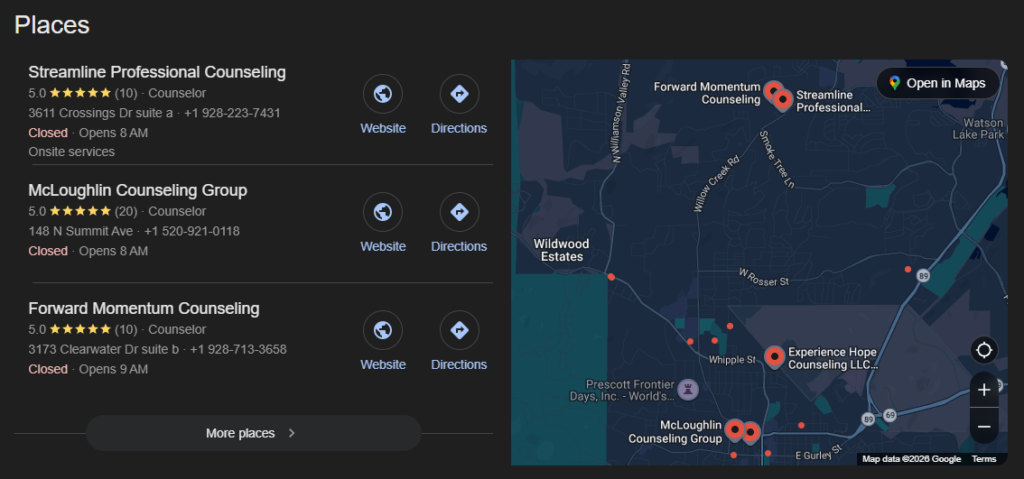
When someone searches for “cardiologist near me,” Google shows a map with three local businesses listed underneath it. This is called the Local Pack. It displays your practice name, phone number, and, most importantly, your star rating.
A listing with 4.8 stars looks much more appealing than a listing with no stars. Patients are far more likely to click on the listing with the best rating.
The Knowledge Panel
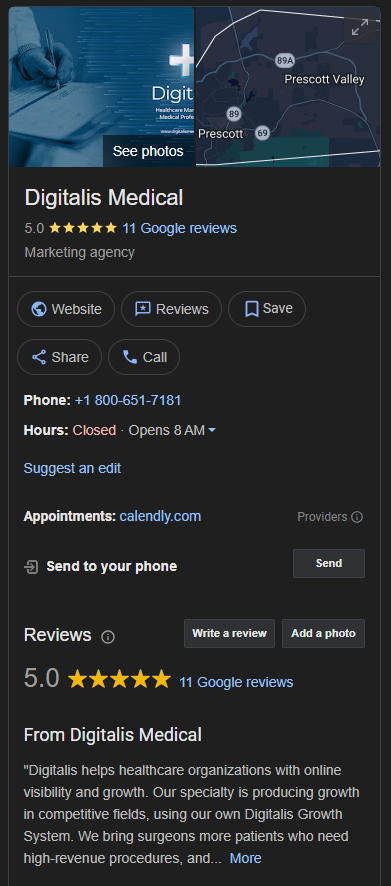
If a patient searches for your specific practice name, a large box appears on the right side of the screen (on desktop) or the top (on mobile). This is the Knowledge Panel. It pulls data directly from your Google Business Profile, heavily featuring your average review rating and snippets of patient feedback.
Google Ads
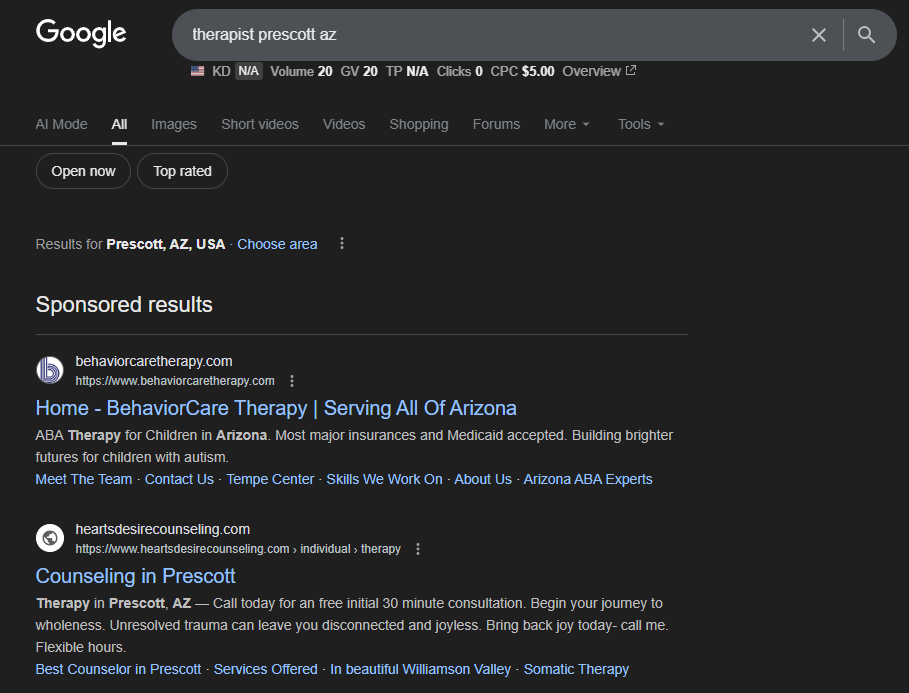
Google Ads appear at the very top of the page. If you use “Seller Ratings” extensions, your star rating can appear inside your paid ads, increasing the chance that people will click on them.
AI and the Future of Reputation Management (2026 Outlook)
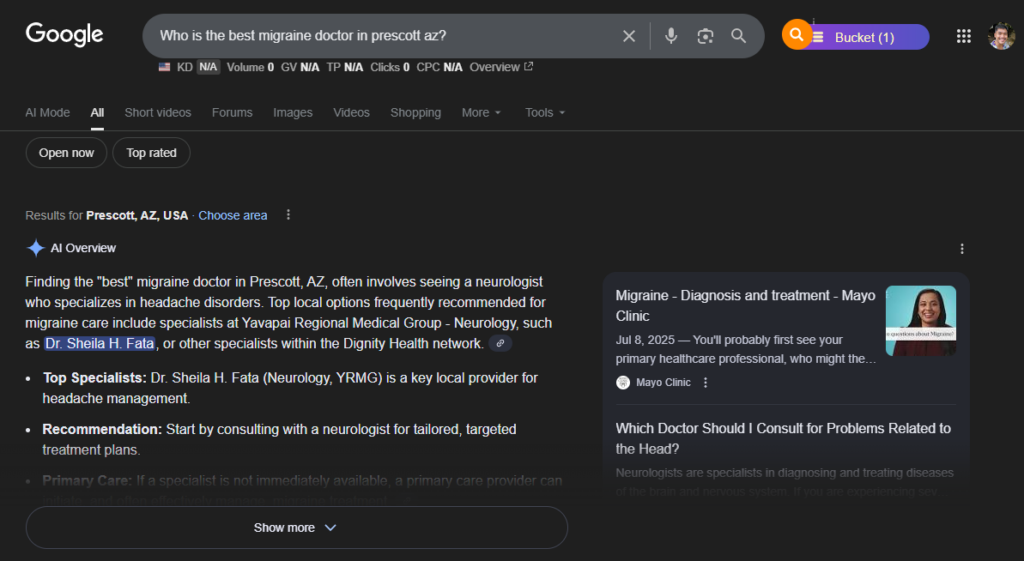
In 2026, the future of SEO is seeing a major shift toward Artificial Intelligence (AI) in search. Tools like Google’s AI Overviews and ChatGPT don’t just count your stars; they read the text of your reviews.
Recent data shows that 38.5% of top-ranking pages are now cited in AI-generated summaries. This means the AI is reading your patient reviews to understand what you are good at.
If a patient writes, “Dr. Smith is excellent at treating migraines,” AI search engines can learn that you are an expert in migraines. This helps you show up when someone asks an AI, “Who is the best migraine doctor in my area?”
How Do Reviews Affect Your Rankings?
Reviews are not just for vanity; they are a direct ranking factor. According to recent data, here is how reviews influence your position on Google:
- Star Rating: Only 48% of consumers would consider using a business with fewer than 4 stars.
- Recency: This is becoming more important. The impact of review recency jumped by over 5% in the last year. A 5-star review from three years ago counts for less than a 4-star review from last week.
- Sentiment: Google scans for keywords like “wait time,” “bedside manner,” and “cleanliness.”
- Quantity: Having 100 reviews is better than having 5, provided the rating remains high.
Positive reviews improve your click-through rate (CTR). When more people click on your website because they see high ratings, Google notices your popularity and boosts your ranking further.
Conversely, negative reviews can harm your brand. However, they are not the end of the world. If you handle them professionally, you can actually build trust with future patients.
Schema Markup: How to Display Star Ratings in Search
Have you ever seen a standard website link on Google that has gold stars underneath it? This is done using Schema Markup.
Schema is a special code you put on your website. It speaks directly to search engines. By adding “Review Schema” or “AggregateRating” code to your website, you can tell Google to display your star rating right on the organic search results page.
This does not directly change your ranking, but it helps your listing pop off the page. Listings with stars get significantly more clicks than those without.
How to Automate & Generate HIPAA-Compliant Reviews
Nobody wants to entrust their health to a doctor with bad credibility. To keep your SEO strong, you need a steady stream of fresh feedback.
Follow these steps to build an excellent reputation:
- Improve your patient experience. Implement strong patient engagement strategies. A happy patient is a healthy patient and a positive reviewer.
- Train your staff to ask. A simple request at the front desk works wonders.
- Use automation software. Use email marketing for doctors or automated texts after appointments asking for feedback.
- Respond to reviews quickly. Patients expect a response. It shows you care.
- Handle negative reviews carefully. Never get into an argument online. Invite the patient to discuss the issue offline.
- Stay HIPAA compliant. Never confirm a patient’s treatment or identity in your response. Keep your replies vague, such as “Thank you for your feedback regarding our office environment.”
Many doctors hire a healthcare marketing agency to handle this. Agencies have tools that can filter feedback and help you generate reviews without violating patient privacy laws.
Measuring the ROI of Your Reputation
How do you know if your reviews are actually bringing in new patients? You need to track your Return on Investment (ROI).
You can use Google Business Profile Insights to see exactly how customers found you. Look for these metrics:
- Direction Requests: How many people clicked “Get Directions” after seeing your reviews.
- Website Clicks: How many people visited your site from your profile.
- Call Volume: How many calls were generated directly from the search page.
By tracking these numbers, you can see a direct line between a better reputation and a busier waiting room.
Boost Your Practice’s Digital Presence
Online reviews are the engine of modern medical SEO. They build trust with patients, feed the Google algorithm, and help AI tools understand your specialty.
Are you a doctor who would like to boost your digital presence? Book a call with Digitalis today. Let our clinician-led team help you build a five-star reputation that drives real results.
Frequently Asked Questions
How do online reviews specifically improve my Google ranking?
Google uses reviews as a primary signal of “Trust,” which is one of the three main pillars of SEO alongside Quality and Authority. A high volume of positive reviews signals to the algorithm that your practice is a verified, safe, and popular choice for patients, which helps push your listing higher in search results.
Why are recent reviews more important than older ones?
Google prioritizes fresh content. The impact of review recency on rankings has increased by over 5% in the last year. A 4-star review received last week carries more weight with the algorithm than a 5-star review from three years ago because it reflects your current quality of care.
How does AI use patient reviews to rank doctors in 2026?
Modern AI tools, such as Google’s AI Overviews, do more than just count stars; they read the actual text of your reviews. By analyzing sentiment and keywords (e.g., “migraine treatment” or “knee surgery”), AI can identify your specific strengths and recommend you when patients ask detailed questions about those conditions.
What is the “Local Pack” and how do reviews affect it?
The Local Pack is the map section that appears at the top of Google search results, displaying three local businesses. Your review count and star rating are prominently displayed here. High ratings significantly increase the likelihood of a patient clicking on your practice over a competitor’s.
Is it HIPAA compliant to respond to patient reviews?
Yes, you can respond, but you must be extremely careful. You should never confirm a patient’s identity or discuss specific treatments publicly. Keep your responses vague and professional, such as thanking them for feedback on the office environment, to ensure you stay compliant while still engaging with patients.
What is Schema Markup and why should I use it?
Schema Markup is a specific code added to your website that speaks directly to search engines. Adding “AggregateRating” schema allows Google to display your star rating underneath your website link in organic search results. This visual element helps your listing stand out and improves your click-through rate.
How should I handle negative reviews?
Negative reviews should be handled professionally and quickly. Do not argue with the patient online. Instead, offer to take the conversation offline to resolve the issue. A professional response to a negative review can actually build trust with future patients by showing that you care about patient satisfaction.
Need help with healthcare seo?
Get a custom strategy built on clinical experience — not generic marketing playbooks.
